Bunion Treatment in Vancouver:
Non-Surgical Options & Custom Orthotics
Are you experiencing pain, pressure or irritation around a bunion? Vancouver Orthotics provides assessment and conservative care for people experiencing bunion-related foot discomfort.
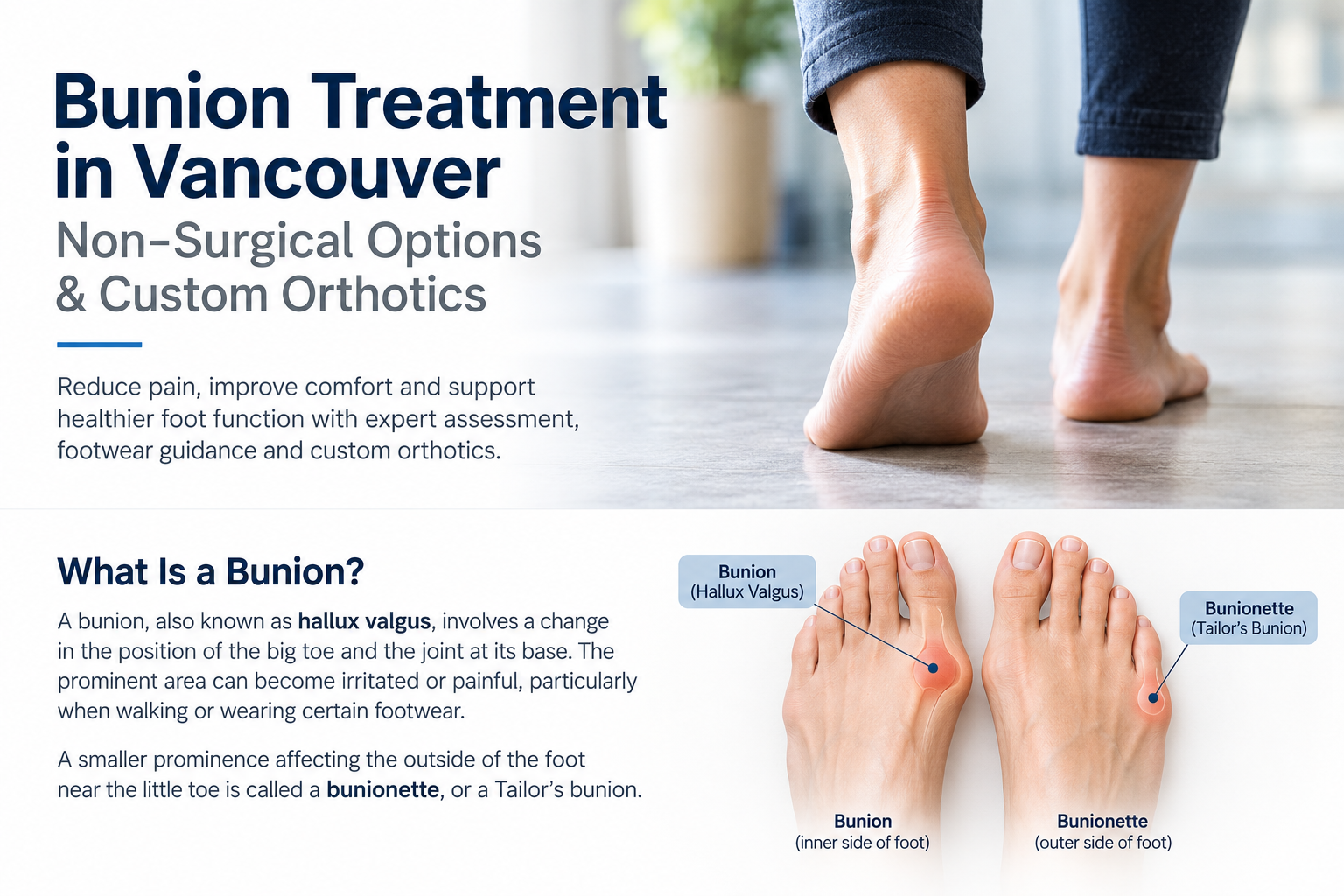
A bunion, also known as hallux valgus, involves a change in the position of the big toe and the joint at its base. The prominent area can become irritated or painful, particularly when walking or wearing certain footwear.
Dr. Michael Horowitz has a special interest in custom orthotics and foot biomechanics. Your assessment may include an examination of your feet, footwear, walking mechanics, a 3D digital foot scan and electronic gait analysis.
Vancouver Orthotics does not perform bunion surgery. Our focus is conservative management, including footwear considerations and custom orthotics when clinically appropriate.
New patients are welcome. Call 604-737-3668 or book an orthotic assessment online.
What Is a Bunion?
A bunion is a change involving the joint at the base of the big toe. As the big toe shifts toward the other toes, the joint may become more prominent along the inside of the foot.
The medical term commonly associated with this deformity is hallux valgus. Some bunions remain relatively comfortable, while others can become painful or interfere with walking, footwear and everyday activities.
A smaller prominence affecting the outside of the foot near the little toe is commonly called a bunionette or Tailor's bunion.
Common Bunion Symptoms
Bunion symptoms vary considerably. Some people notice the change in the shape of their foot before experiencing significant discomfort.
- A visible bump near the base of the big toe
- Pain or tenderness around the big-toe joint
- Redness or irritation from footwear
- Pressure where the first and second toes contact each other
- Corns or calluses caused by rubbing
- Difficulty fitting comfortably into certain shoes
- Changes in the position of the big toe
- Discomfort during walking, running or other activities
What Causes Bunions?
Bunions can develop for a number of reasons, and there is not necessarily one cause in every person. Foot structure and hereditary factors can contribute to their development.
Foot mechanics may also influence how forces are distributed through the foot. Footwear that crowds the toes can aggravate an existing bunion and increase pressure on the prominent joint.
This is one reason an assessment should look beyond the visible bump. At Vancouver Orthotics, we can assess foot structure, footwear and walking mechanics to determine whether biomechanical factors may be contributing to your symptoms.
Can Bunions Be Treated Without Surgery?
Many people searching for bunion treatment are specifically looking for ways to manage their symptoms without surgery.
Conservative treatment does not remove the structural bunion. However, depending on the individual, non-surgical strategies may help reduce pressure and irritation, improve footwear comfort and make walking or other activities more comfortable.
Conservative approaches may include:
- Choosing footwear with adequate width and room around the toes
- Avoiding footwear that places excessive pressure on the bunion
- Using padding or other strategies to reduce friction where appropriate
- Modifying activities when the joint is particularly irritated
- Custom orthotics when foot mechanics or pressure distribution may be contributing to symptoms
Can Custom Orthotics Help With Bunions?
Custom orthotics cannot remove a bunion or permanently straighten the big toe. Their potential role is different.
For some patients, custom orthotics may help support the foot and modify how pressure and forces are distributed during standing and walking. This may be useful when biomechanical factors are contributing to discomfort around the bunion or elsewhere in the foot.
Whether orthotics are appropriate depends on your individual foot structure, symptoms, activities and footwear. They should therefore be recommended following an appropriate assessment rather than simply because a bunion is present.
Learn more about custom orthotics cost and pricing.
Orthotics for Bunions and Flat Feet
Some people with bunions also have flat feet or increased pronation. These conditions are not the same thing, and having flat feet does not automatically mean that a person will develop a bunion.
When both are present, evaluating how the foot functions during walking can help determine whether additional support or changes in pressure distribution may be appropriate.
How We Assess Bunions and Foot Biomechanics
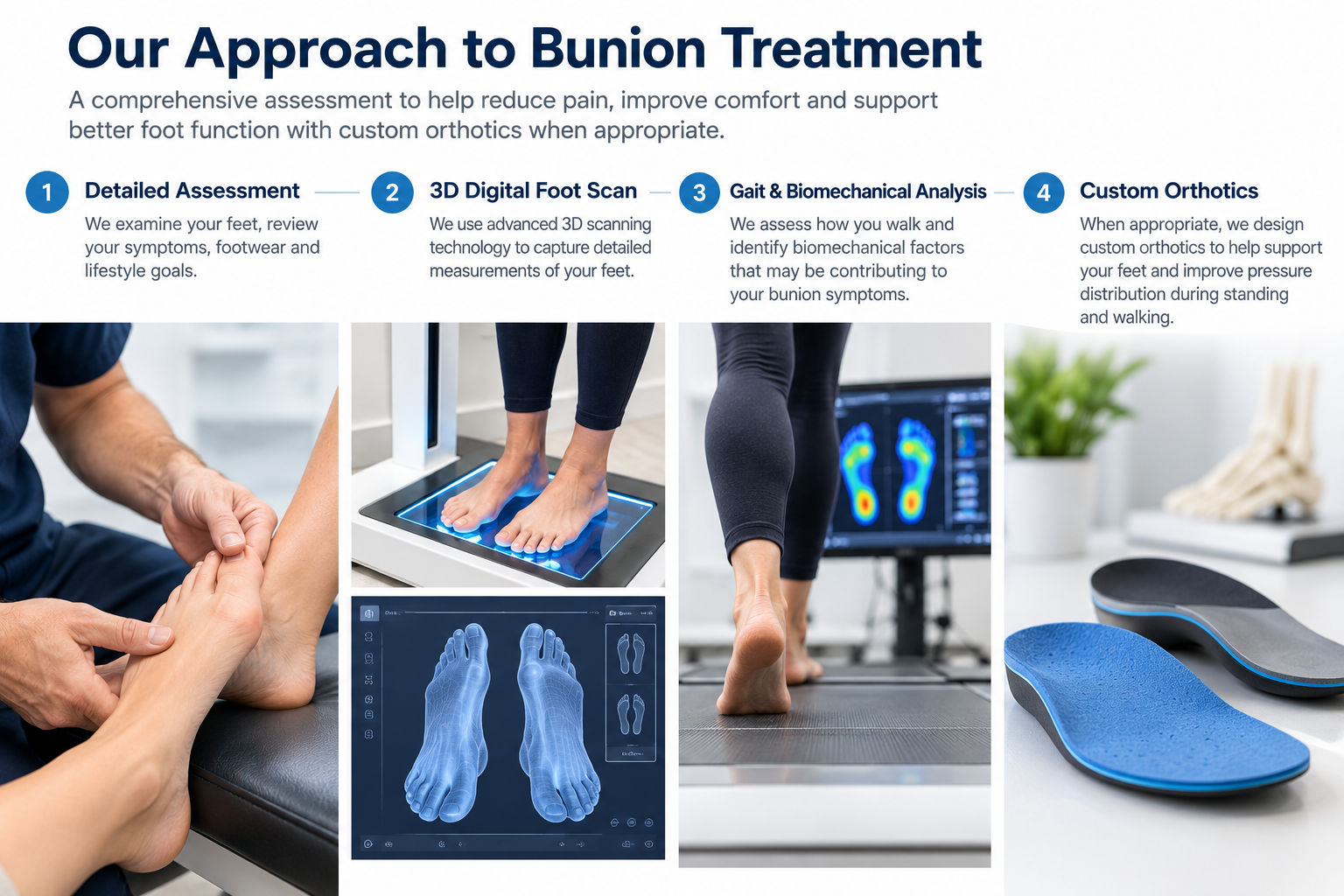
A bunion assessment should consider more than the appearance of the big-toe joint. Dr. Michael Horowitz can evaluate your symptoms, foot structure, footwear and biomechanics.
A bunion assessment should consider more than the appearance of the big-toe joint. Dr. Michael Horowitz can evaluate your symptoms, foot structure, footwear and biomechanics.
Depending on your presentation, your assessment may include:
- Foot and biomechanical examination
- Assessment of standing and walking mechanics
- Electronic gait analysis
- 3D digital foot scanning
- Review of footwear and fit
- Discussion of whether custom orthotics may be appropriate
What About Bunion Splints and Bunion Correctors?
Bunion splints, toe spacers and products marketed as "bunion correctors" are widely available. Some people may find certain devices useful for temporary comfort or reducing rubbing between the toes.
However, products marketed as bunion correctors should not be assumed to permanently reverse an established structural bunion. If you have persistent pain or progressive changes in your foot, an appropriate clinical assessment is preferable to relying solely on an over-the-counter device.
What Is a Bunionette?
A bunionette, sometimes called a Tailor's bunion, develops near the joint at the base of the little toe rather than the big toe.
Like a bunion, a bunionette can become irritated by footwear and pressure. Conservative management may include footwear changes, reducing pressure around the affected area and assessing foot mechanics where appropriate.
When Should Bunion Surgery Be Considered?
Some people are able to manage bunion symptoms conservatively, while others may eventually seek a surgical opinion because of persistent pain, functional limitations or progression of the deformity.
Vancouver Orthotics does not perform bunion surgery. Questions about whether surgery is appropriate, the type of procedure, expected recovery and surgical risks should be discussed with an appropriately qualified surgical provider.
If you are researching surgical options, read our educational guide to minimally invasive bunion surgery.
Bunion Treatment in Vancouver
If your goal is to explore conservative options for bunion-related foot discomfort, Vancouver Orthotics can assess your feet and biomechanics and discuss whether footwear changes, custom orthotics or other conservative measures may be appropriate.
Dr. Michael Horowitz has been in practice since 2000 and has a special interest in custom orthotics and foot biomechanics.
Appointments are available through our Vancouver clinic locations.
Book a Bunion & Foot Biomechanical Assessment
New patients are welcome. If bunion pain or changes in your foot are affecting your walking, footwear or daily activities, you can schedule an assessment with Vancouver Orthotics.
Call: 604-737-3668
Online: Book an Appointment
This information is provided for general educational purposes and is not a substitute for individualized medical advice, diagnosis or surgical consultation.