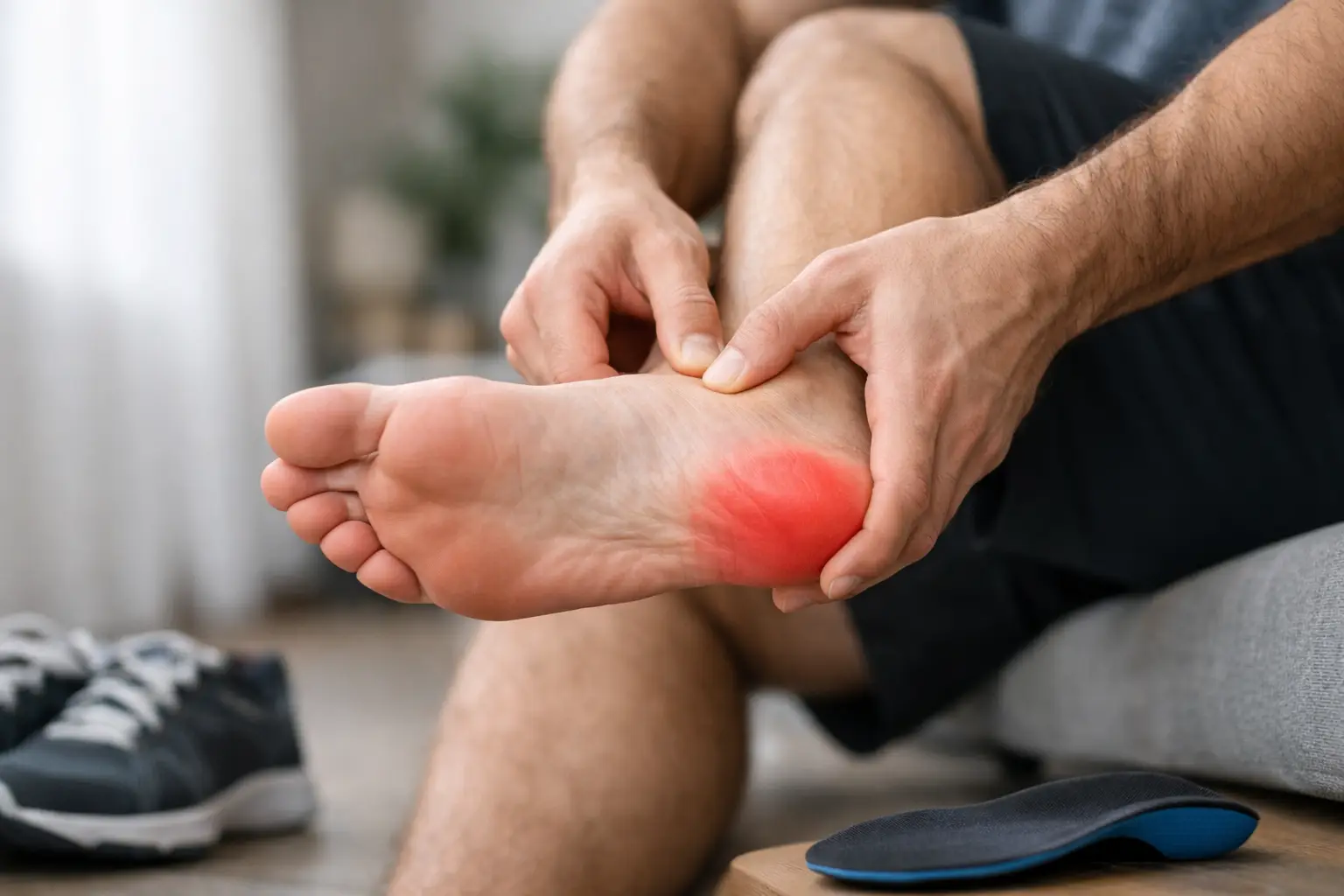
That sharp pain under the heel when you take your first steps out of bed is one of the most recognizable signs of plantar fasciitis. For many people, it eases after they walk around for a few minutes, then returns after a long shift, a workout, or time spent standing. The pattern can be frustrating because the foot may feel manageable one day and very limiting the next.
Plantar fasciitis is common among runners and walkers, but it also affects office workers, healthcare staff, retail employees, parents, and anyone whose feet spend long hours on hard surfaces. Relief usually requires more than simply resting for a few days. A clear assessment of the foot, gait, footwear, activity demands, and lower-limb alignment can help identify why the heel is being overloaded in the first place.
What plantar fasciitis feels like
The plantar fascia is a thick band of connective tissue along the bottom of the foot. It runs from the heel toward the toes and helps support the arch while you stand, walk, and push off the ground. When this tissue is repeatedly strained, pain can develop near its attachment at the heel.
Heel pain from plantar fasciitis is often most noticeable with the first steps after rest. People may describe it as a stabbing, bruised, burning, or pulling feeling at the bottom and slightly inside portion of the heel. It can also appear after sitting at a desk, driving, or getting up after a break.
As the condition progresses, pain may become more persistent. Some people change how they walk to avoid the sore area, which can place extra stress on the ankle, calf, knee, hip, or low back. Heel pain does not always mean plantar fasciitis, however. Nerve irritation, stress injuries, inflammatory conditions, fat-pad irritation, and Achilles tendon concerns can create similar symptoms. That is why a clinical diagnosis matters when pain is recurring or affecting daily activity.
Why plantar fasciitis develops
Plantar fasciitis rarely has one single cause. It is usually the result of repeated load exceeding what the foot and lower leg can comfortably manage. A sudden increase in running mileage, a new standing job, a vacation with much more walking, or returning to exercise after time off can all trigger symptoms.
Foot mechanics often play a role. Flat feet and arches that roll inward excessively can place ongoing tension on the plantar fascia. Very high arches can also concentrate pressure through the heel and forefoot. Limited ankle motion, tight calf muscles, reduced big-toe movement, and weakness or poor control through the hips and lower leg may contribute as well.
Footwear is another common factor. Shoes with worn-out midsoles, limited support, or poor fit may not manage the demands of long standing or walking. Minimal footwear may work well for some people, but a sudden transition to less supportive shoes can aggravate an already overloaded foot. The right shoe is not identical for everyone, which is one reason generic advice can fall short.
Body weight, work surfaces, training load, and recovery habits also matter. None of these factors should be viewed as blame. They are useful clinical clues that help determine which changes are most likely to reduce stress on the painful tissue.
Treatment starts with reducing the strain
Many cases improve with conservative care, but improvement is often gradual. The goal is not simply to make the foot feel better for a day. It is to reduce irritation while improving the foot's ability to tolerate walking, work, exercise, and other daily demands.
A short period of activity modification can be useful when pain is sharp or worsening. This does not always mean complete rest. A runner may need to reduce distance, hills, or speed work temporarily. Someone who stands all day may benefit from more frequent sitting breaks, supportive footwear, and a change in how they manage long shifts. Staying active within a tolerable pain range is often more practical than stopping all movement.
Gentle calf and plantar fascia stretching can help, especially before the first steps in the morning. Rolling the sole of the foot over a ball may feel relieving for some people, although it should not be aggressive enough to increase pain. Strengthening exercises for the feet, calves, and hips may be added as symptoms settle and the individual can tolerate more load.
Cold therapy may provide short-term comfort after activity. Anti-inflammatory medication may be appropriate for some people, but it is not suitable for everyone and should be discussed with a qualified healthcare professional. Neither medication nor icing corrects the mechanical contributors that can keep heel pain returning.
Why supportive orthotics may help
Custom orthotics are not a cure-all, and they are not necessary for every case of plantar fasciitis. They can be particularly helpful when an assessment identifies excessive strain related to arch mechanics, heel position, pressure distribution, or gait patterns.
A properly prescribed orthotic is designed to support the foot according to the individual's needs rather than providing the same shape of support for every person. Depending on the clinical findings, it may help distribute pressure away from the painful area, improve arch support, reduce excessive pronation, or create a more stable base for walking and standing.
Retail insoles can offer temporary comfort, particularly for mild symptoms or short-term use. Their limitation is that they are selected from a shelf rather than based on a diagnosis and measured foot mechanics. If heel pain has persisted, repeatedly returns, or affects work and exercise, a clinician-led assessment can clarify whether a custom device is likely to be worthwhile.
At Vancouver Orthotic Clinics, the assessment process includes practitioner evaluation and 3D foot scanning to examine how foot structure and function may be contributing to symptoms. This information helps guide treatment recommendations rather than relying on a one-size-fits-all insert.
When to seek a plantar fasciitis assessment
Consider booking an assessment when heel pain lasts longer than a few weeks, keeps returning after rest, or changes the way you walk. It is also sensible to seek care if you have tried new shoes, stretching, and activity changes without meaningful improvement.
Prompt assessment is especially important if you cannot bear weight, have marked swelling, numbness, redness, fever, pain after a specific injury, or pain that wakes you at night. These symptoms may point to something other than routine plantar fascia irritation and should not be self-treated as plantar fasciitis.
During a clinical evaluation, the practitioner may ask about your work, sport, footwear, previous injuries, and the timing of your symptoms. They can assess tenderness, ankle and toe mobility, calf tightness, standing alignment, and gait. This broader view helps distinguish a simple flare-up from a problem driven by ongoing biomechanical stress.
Preventing heel pain from coming back
Once symptoms improve, return to activity gradually. A pain-free week does not always mean the tissue is ready for a sudden jump in running, long hikes, or double shifts on hard floors. Build distance, intensity, and standing time in manageable increments.
Keep an eye on footwear condition. Shoes may look fine on the outside while their cushioning and stability have deteriorated. Choose footwear that suits the activity, fits comfortably through the heel and midfoot, and leaves enough room for the toes. If you use orthotics, bring them when trying on shoes so you can judge the full fit.
Consistency matters more than extreme stretching or occasional treatment. A manageable routine of mobility work, progressive strengthening, supportive footwear, and load management is usually more effective than pushing through severe pain and then resting completely.
Heel pain can make ordinary tasks feel like a calculation, from getting out of bed to finishing a work shift. With a confirmed diagnosis and a plan matched to your feet, lifestyle, and activity goals, plantar fasciitis can become a problem you actively manage rather than one that keeps setting the limits.