Minimally Invasive Bunion Surgery in Vancouver & Canada
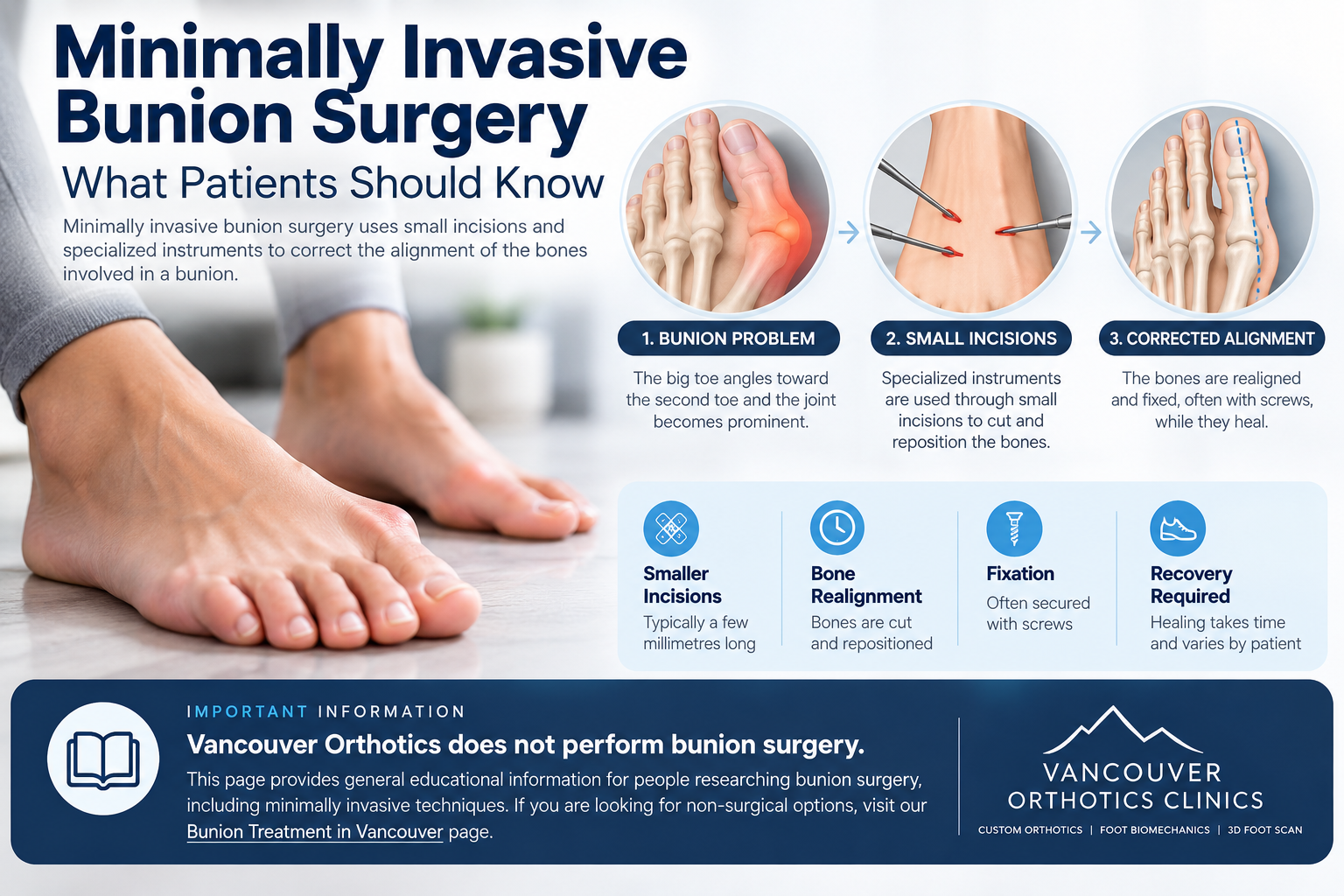
People searching for bunion surgery in Vancouver increasingly encounter information about minimally invasive bunion surgery, sometimes called MIS. This type of surgery uses small incisions and specialized surgical instruments to correct the alignment of the bones involved in a bunion.
People searching for bunion surgery in Vancouver increasingly encounter information about minimally invasive bunion surgery, sometimes called MIS. This type of surgery uses small incisions and specialized surgical instruments to correct the alignment of the bones involved in a bunion.
Important: Vancouver Orthotics and Dr. Michael Horowitz do not perform bunion surgery. This page is provided for educational purposes for people researching bunion surgery, minimally invasive techniques and non-surgical options for bunion-related discomfort.
If you are looking for conservative care rather than surgery, visit our Bunion Treatment in Vancouver page.
What Is a Bunion?
A bunion, also called hallux valgus, develops when the bones around the big-toe joint become progressively misaligned. The big toe may angle toward the second toe while the joint at the base of the big toe becomes more prominent.
Some bunions cause relatively little discomfort, while others may be associated with pain, pressure from footwear, irritation around the joint and difficulty wearing certain shoes.
The appearance of a bunion alone does not determine whether surgery is appropriate. A surgical assessment generally considers symptoms, physical examination, X-rays, the degree of deformity and how the problem affects daily activities.
What Is Minimally Invasive Bunion Surgery?
Minimally invasive bunion surgery is a group of surgical techniques used to correct a bunion through relatively small incisions. Specialized instruments are used to cut and reposition bones, and fixation such as screws may be used to maintain the corrected position while the bones heal.
One minimally invasive technique is known as MICA, or minimally invasive chevron and Akin osteotomies. This approach involves cutting and repositioning the first metatarsal and, when appropriate, part of the big-toe bone. The procedure is performed through small incisions with X-ray guidance.
There are several ways to surgically correct a bunion. Minimally invasive surgery is not appropriate for every person or every bunion, and not every surgeon performs these techniques.
Minimally Invasive vs. Traditional Bunion Surgery
Both minimally invasive and more traditional open bunion procedures are intended to correct the structural alignment associated with a bunion. The main difference is how the surgeon accesses and corrects the bones and soft tissues.
Minimally invasive techniques use smaller incisions and specialized instruments, while traditional procedures generally provide the surgeon with more direct visualization through a larger incision.
Potential advantages associated with minimally invasive approaches can include smaller scars and, in some circumstances, differences in postoperative discomfort or recovery. However, minimally invasive does not mean minor surgery. Bones may still be cut, repositioned and fixed in place, and an appropriate healing period is still required.
The most suitable surgical technique depends on the individual bunion, symptoms, X-rays, overall health and the surgeon's assessment and experience.
Who May Be a Candidate for Bunion Surgery?
Bunion surgery is generally considered because of symptoms and functional problems rather than simply because a bunion is visible.
A person experiencing persistent bunion pain, difficulty with footwear or limitations in everyday activities despite reasonable conservative measures may choose to discuss surgery with an appropriate surgical provider.
Whether minimally invasive surgery or another procedure is suitable requires an individualized surgical assessment. Standing X-rays are commonly used to assess the alignment and severity of the bunion and help determine an appropriate procedure.
Does Bunion Surgery Permanently Correct a Bunion?
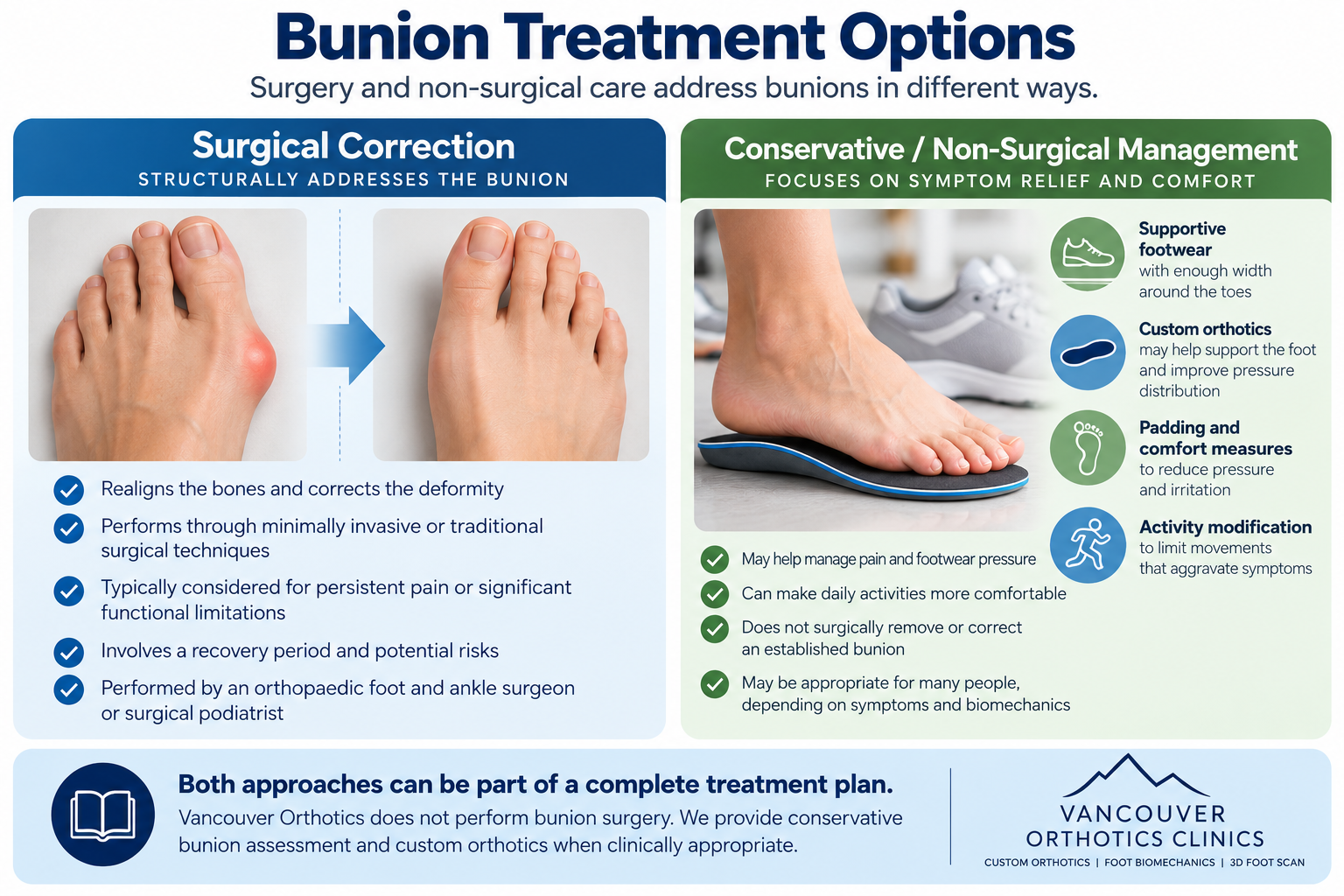
Surgery is different from conservative bunion treatment because surgery can structurally reposition the bones involved in the deformity. Non-surgical approaches may help manage symptoms and footwear pressure, but they do not surgically realign an established bunion.
However, no operation can guarantee that a bunion will never recur. Recurrence is one of the potential complications that should be discussed with the surgeon.
What Is Recovery Like After Minimally Invasive Bunion Surgery?
Recovery varies according to the procedure performed, the severity of the bunion, the patient's health and the surgeon's postoperative protocol.
Some patients undergoing minimally invasive bunion surgery may be permitted to put weight on the operated foot while wearing a special postoperative shoe. A postoperative shoe may be required for approximately six weeks in some surgical protocols.
Swelling can continue for several months, and complete recovery from bunion surgery may take approximately six months to one year. These are general ranges rather than a prediction of an individual patient's recovery.
Your surgeon should provide specific instructions about weight bearing, driving, work, exercise, footwear and returning to normal activities.
What Are the Risks of Minimally Invasive Bunion Surgery?
All surgery carries risks. Potential complications associated with bunion surgery can include:
- infection;
- nerve injury or numbness;
- problems with bone healing;
- pain or irritation associated with surgical hardware;
- persistent symptoms; and
- recurrence of the bunion.
The risks and potential benefits vary by patient and procedure and should be discussed directly with the surgeon considering the operation.
How Much Does Bunion Surgery Cost in Canada?
There is no single Canadian price for bunion surgery. The patient's province, medical necessity, surgical provider, facility, procedure and whether treatment occurs through a publicly insured or private setting can all affect what a patient may have to pay.
Online prices for bunion surgery should therefore be interpreted cautiously. A price quoted by a private clinic may not represent what a patient in British Columbia would pay through the provincial health system, and it may not include every component of treatment.
If you are considering surgery, ask the surgical provider exactly what is covered and whether there may be charges for the consultation, surgical facility, supplies, imaging, postoperative devices or other services.
Is Bunion Surgery Covered by MSP in British Columbia?
British Columbia's Medical Services Plan (MSP) provides coverage for medically required physician and surgeon services. Surgical podiatry is also an MSP benefit when applicable requirements are met.
That does not mean every bunion procedure, provider or associated expense will automatically be covered. Cosmetic surgery performed solely to alter appearance is not an MSP benefit, and additional charges can apply in some circumstances, particularly with surgical podiatry or private facilities.
If you are considering bunion surgery in B.C., confirm your individual coverage with the surgeon or surgical clinic and, when necessary, with MSP before proceeding.
What Is Lapiplasty Bunion Surgery?
People researching bunion surgery in Canada may also encounter the term Lapiplasty. It should not be treated as another name for all minimally invasive bunion surgery.
Lapiplasty is a branded approach related to a type of bunion correction involving the first tarsometatarsal joint. Procedures involving this area are often discussed in relation to a Lapidus-type procedure, in which the alignment is corrected and the joint is fused.
Different bunion operations address different components of the deformity. A surgeon determines which approach, if any, is appropriate after examination and imaging.
Can Bunions Be Treated Without Surgery?
Yes. Not everyone with a bunion requires surgery.
Yes. Not everyone with a bunion requires surgery.
Conservative treatment does not remove an established structural bunion, but it may help some people manage symptoms, reduce pressure around the prominent joint and make footwear or daily activities more comfortable.
Depending on the individual, conservative management may include:
- wearing shoes with sufficient width around the toes;
- reducing pressure and irritation over the bunion;
- padding or other simple comfort measures;
- modifying activities that aggravate symptoms; and
- custom orthotics when foot mechanics or pressure distribution may be contributing to symptoms.
Custom Orthotics and Bunions
Custom orthotics do not surgically straighten the big toe or remove an established bunion.
Where appropriate, custom orthotics may be used as part of conservative management to support the foot and modify how pressure is distributed during standing and walking. Whether orthotics are appropriate depends on the individual's symptoms, foot mechanics, footwear and examination findings.
Dr. Michael Horowitz has a special interest in custom orthotics and foot biomechanics. Assessment at Vancouver Orthotics may include a foot and biomechanical examination, electronic gait analysis, footwear review and a 3D digital foot scan.
Learn more about our non-surgical bunion treatment in Vancouver or read about custom orthotics costs and assessment fees.
Should I See a Surgeon About My Bunion?
If bunion pain is persistent, is interfering with walking or normal activities, is making footwear increasingly difficult, or has not responded adequately to conservative measures, it may be appropriate to discuss surgical options with a qualified surgical provider.
A surgical consultation does not necessarily mean you must proceed with surgery. It provides an opportunity to review your symptoms, examination and imaging and to discuss available procedures, expected recovery, potential benefits and risks.
Questions to Ask Before Bunion Surgery
- What type of bunion do I have and how severe is it?
- Why are you recommending this particular procedure?
- Am I a candidate for minimally invasive bunion surgery?
- What alternatives to surgery are reasonable for me?
- How long will I need a postoperative shoe, boot or other support?
- When can I walk, drive, work and exercise again?
- What complications should I understand?
- What is the likelihood of recurrence?
- Which costs are covered by provincial health insurance?
- Are there any additional facility, equipment or postoperative costs?
Looking for Non-Surgical Bunion Treatment in Vancouver?
Vancouver Orthotics does not perform bunion surgery. Our role is in conservative foot and biomechanical assessment and custom orthotics when clinically appropriate.
If you have a bunion and would like to explore non-surgical options before deciding whether to seek a surgical consultation, we can assess your feet, footwear and biomechanics.
New Patients Welcome
Call Vancouver Orthotics: 604-737-3668
Book an Appointment Online
This page provides general educational information and is not a diagnosis, surgical recommendation or substitute for assessment by an appropriately qualified healthcare professional. Vancouver Orthotics does not perform bunion surgery.