Morning heel pain can make the first few steps of the day feel surprisingly difficult. A 3D foot scan for orthotics helps turn symptoms like heel pain, tired arches, recurring shin discomfort, or knee strain into measurable information a clinician can use when recommending custom support.
A scan is not simply a detailed picture of your foot. It is one part of a clinical assessment that considers how your feet support your body, how your joints move, and where everyday walking or standing may be placing too much stress. For people who have tried store-bought insoles without lasting relief, that difference matters.
What a 3D Foot Scan for Orthotics Does
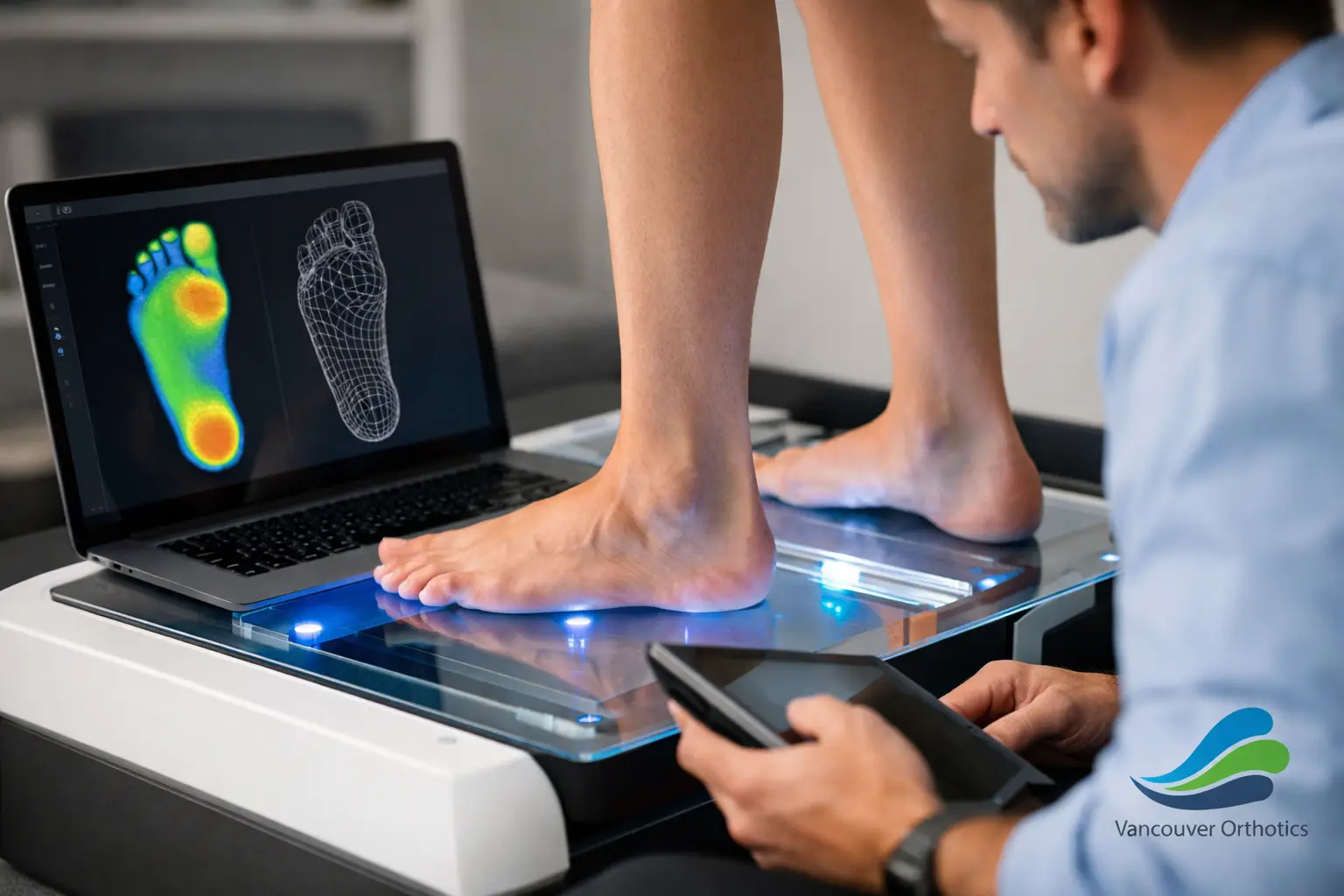
A 3D scanner captures the contours of your feet in precise detail. It records the length, width, arch profile, heel shape, and overall surface geometry of each foot. The result is a digital model that can be used in the design of custom orthotics.
Your left and right feet are not always the same. One foot may flatten more through the arch, carry more pressure, or have a different heel position. A 3D foot scan helps identify these differences rather than assuming both feet need identical support.
The scan also makes the fitting process more consistent. Traditional casting methods rely heavily on the impression taken at a single moment. Digital scanning provides a clear record that can be reviewed alongside the clinical findings and used to create an orthotic matched to the shape of your foot.
That said, the scan does not diagnose pain on its own. A well-shaped orthotic is only useful when its design reflects the reason you are hurting. Heel pain from plantar fasciitis, for example, may call for a different combination of arch support, heel cushioning, and foot control than pain at the ball of the foot or discomfort related to Achilles tendon irritation.
Why the Clinical Assessment Comes First
Feet do not work in isolation. They are the foundation for the ankles, knees, hips, and low back. When the foot rolls inward excessively, lacks support, or cannot move efficiently, the body may compensate higher up the leg.
Before or alongside a scan, a practitioner may ask when your pain started, what makes it worse, what footwear you use, and whether you spend long hours walking, standing, running, or working on hard floors. They may assess your posture, joint motion, gait, foot alignment, and areas of tenderness.
This is particularly helpful when symptoms are similar but the causes are different. Two people may both report arch pain. One may have flat-foot-related strain and need more control through the midfoot. Another may have a high arch that does not absorb impact well and may benefit from a different type of cushioning and load distribution.
A complete assessment also helps identify when orthotics are likely to be useful and when another conservative treatment should be included. Recommendations may involve activity adjustments, stretching, strengthening, footwear guidance, or supportive products in addition to custom orthotics.
What Happens During the Scan
The scanning portion of an appointment is quick and comfortable. Depending on the assessment approach, you may stand in a natural position while the scanner captures your foot shape. The process is contact-free and does not involve radiation.
The clinician uses the scan as part of the larger picture. They consider where your arch sits, how the heel is positioned, whether one foot is wider or longer, and how the foot shape relates to your symptoms and movement findings. The digital file is then used to help manufacture the orthotics to the prescribed specifications.
For children, active adults, and older adults alike, the value is the same: a clearer starting point for support that fits the individual foot rather than an average foot shape. The final orthotic design may still vary substantially from person to person, even when the diagnosis sounds similar.
When a Scan May Be Worth Considering
A 3D scan can be useful when pain keeps returning, when a generic insole feels uncomfortable, or when you need support for more than one activity. Runners may need help managing repetitive impact, while retail, healthcare, and warehouse workers may need support that remains comfortable during long shifts on their feet.
Consider a clinical assessment if you notice:
- Heel pain that is worst with first steps in the morning or after rest
- Arch fatigue, flat feet, or shoes that wear unevenly
- Pain beneath the ball of the foot, near a bunion, or across the forefoot
- Recurring ankle, shin, knee, hip, or low back discomfort that seems connected to standing or walking
- Achilles tendon irritation or discomfort after increasing activity
These symptoms do not automatically mean you need orthotics. They do mean it is reasonable to look at foot function and alignment, especially if the issue is limiting work, exercise, or daily walks.
Custom Orthotics Versus Retail Insoles
Retail insoles can be a practical short-term option. They are readily available, less expensive upfront, and may provide additional cushioning or mild arch support. For occasional fatigue or a temporary change in footwear, they can be helpful.
Custom orthotics are different because they are prescribed after an assessment and built around your foot shape, symptoms, and movement needs. The goal is not to make the arch feel as high as possible. It is to provide the right support, cushioning, and control in the right areas.
More support is not always better. An orthotic that is overly firm or too aggressive for your foot can feel uncomfortable and may be difficult to wear. Similarly, a softer orthotic is not automatically the best choice for every condition. Material selection and design depend on your diagnosis, body mechanics, footwear, and daily demands.
This is why a follow-up period matters. Your body may need time to adapt, and your clinician can address fit concerns or changes in symptoms. Bring the shoes you wear most often to your appointment when possible, since the shoe’s depth, shape, and purpose affect which orthotic design will work best.
Coverage and Documentation Questions
Many extended health plans include coverage for custom orthotics, but requirements vary. Some plans require a prescription, a clinical assessment, specific provider documentation, or a receipt that lists particular details. Coverage limits and renewal periods can also differ.
Before your appointment, review your plan or contact your insurer to ask what documentation is needed for a custom orthotic claim. Keep copies of your assessment records, prescription if required, and receipts. A clinic team can explain the documentation typically provided, but your insurer makes the final decision about reimbursement.
A Measured Path Toward More Comfortable Movement
A 3D scan is valuable because it replaces guesswork with useful measurements, but it works best as part of a practitioner-led assessment. If foot, heel, leg, knee, hip, or back pain is changing how you move, an appointment can help clarify whether custom orthotics are an appropriate next step.
At Vancouver Orthotic Clinics, new patients can book an assessment to discuss symptoms, have their foot function evaluated, and receive a treatment recommendation based on their individual needs. Comfortable movement often starts with understanding what your feet are asking your body to compensate for.